Blade Is Back — And It's Time to Remember Why He Saved Superhero Movies Before the MCU Existed
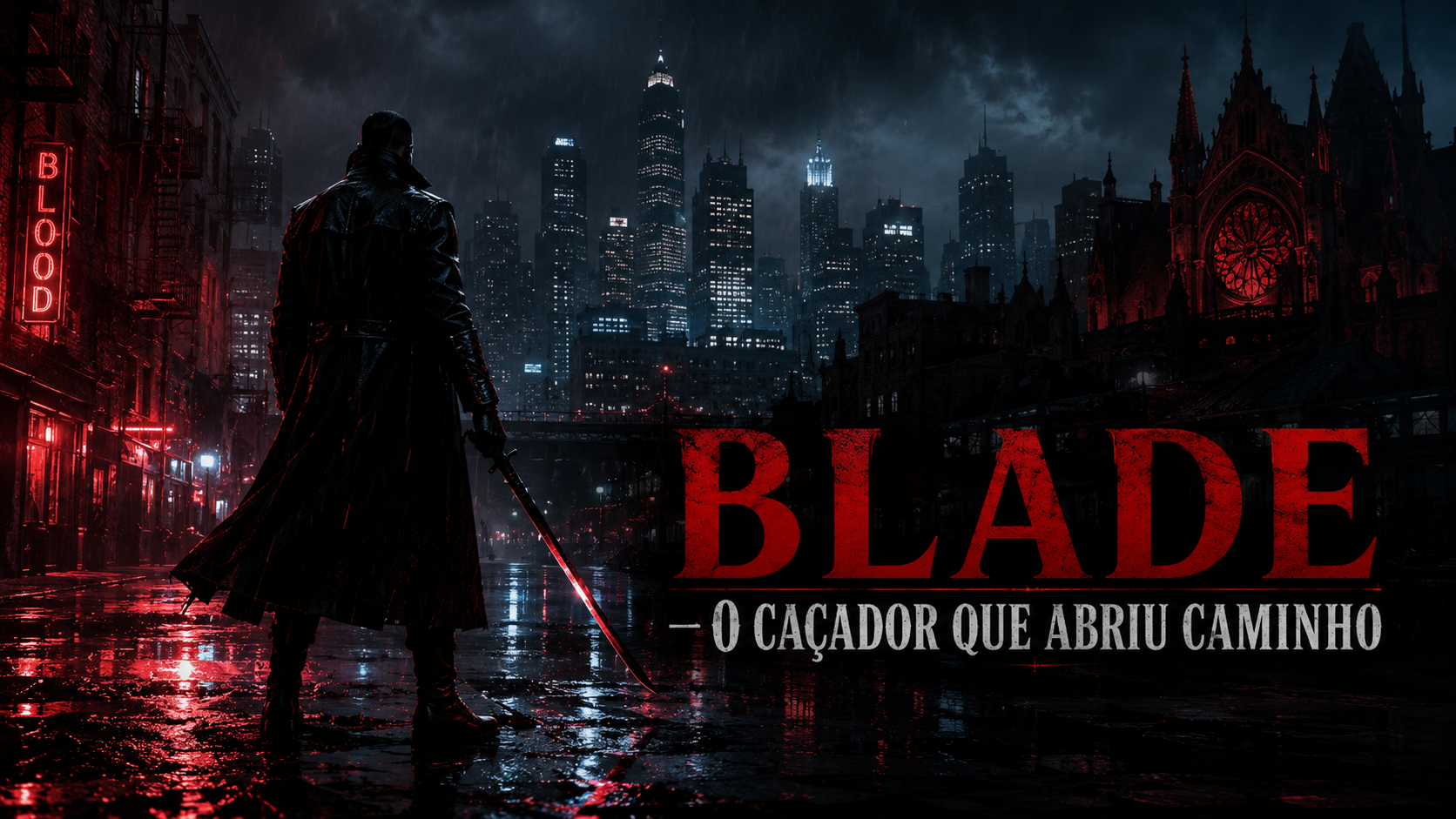
In 1998, comic book cinema was in crisis.
Batman & Robin (1997) had been such a disaster that Warner Bros. froze the franchise for eight years. Hollywood executives had concluded that superhero films didn’t work for adults. They were kid stuff. They were kitsch. They were embarrassing to watch in the popcorn line.
Then Blade arrived.
The scene that changed everything
The opening sequence of Blade (1998) begins in an industrial warehouse. A man is led through a crowd toward what looks like a party. The doors open: it’s a club. The DJ is a vampire. The music drops. And then the ceiling starts raining blood.
No one had seen that in a comic book movie before.
It wasn’t childish. It wasn’t innocent. It was adult, violent, shot like a music video, with a soundtrack that made your heart race. And in the middle of it all, Wesley Snipes — sunglasses, leather coat, the expression of a man who has seen this a thousand times — walked in and started clearing the room.
Blade grossed around 131 million dollars on a 45 million budget. It was a success almost no one had predicted.
Why Blade matters to the history of the MCU
Marvel Entertainment was on the edge of bankruptcy in 1998. It had sold the rights to dozens of characters to different studios. Blade was produced by New Line Cinema, not by Marvel itself.
But the film’s success is what convinced Hollywood that Marvel had viable properties. That comic book characters could make serious money. That adult audiences were willing to step into this universe — if the film was good.
Without Blade, there probably wouldn’t have been X-Men (2000). Without X-Men, probably no Spider-Man (2002). And without Spider-Man, the chain that led to the MCU would have been much longer, if it happened at all.
Blade is a dhampir — half vampire, half human
The character was born in Marvel’s comics in 1973, created by Marv Wolfman and Gene Colan, debuting in Tomb of Dracula #10. Eric Brooks became a dhampir after his mother was bitten by a vampire during childbirth: he carries the strength and powers of vampires, but without the weakness to sunlight. The only weakness left is the thirst for blood.
He’s a character built on an identity conflict. He belongs to two worlds and doesn’t fully belong to either.
Mahershala Ali and the new Blade
Marvel Studios announced in 2019, on the San Diego Comic-Con stage, that the new Blade would be played by Mahershala Ali. Since then, the project has gone through a run of delays, writer changes, and restarts — the kind that test any fan’s patience.
What’s known is the essential: Ali has won two Oscars (Moonlight and Green Book). He knows how to build characters with moral layers. He understands internal conflict like few actors of his generation.
Blade, the character, was made for exactly that. A hunter who has to control his own nature so he doesn’t become the thing he hunts. If the new film understands that this is the story — and not just the action — the dhampir has everything he needs to open a door all over again.
Comic book nostalgia today. Check out our Toy Story 5 piece too — another franchise that came back to stir a generation’s memory.
Want to meet the hunter in the original? Blade in the comics 🗡️