Nintendo 64 at 30: when 3D entered the living room
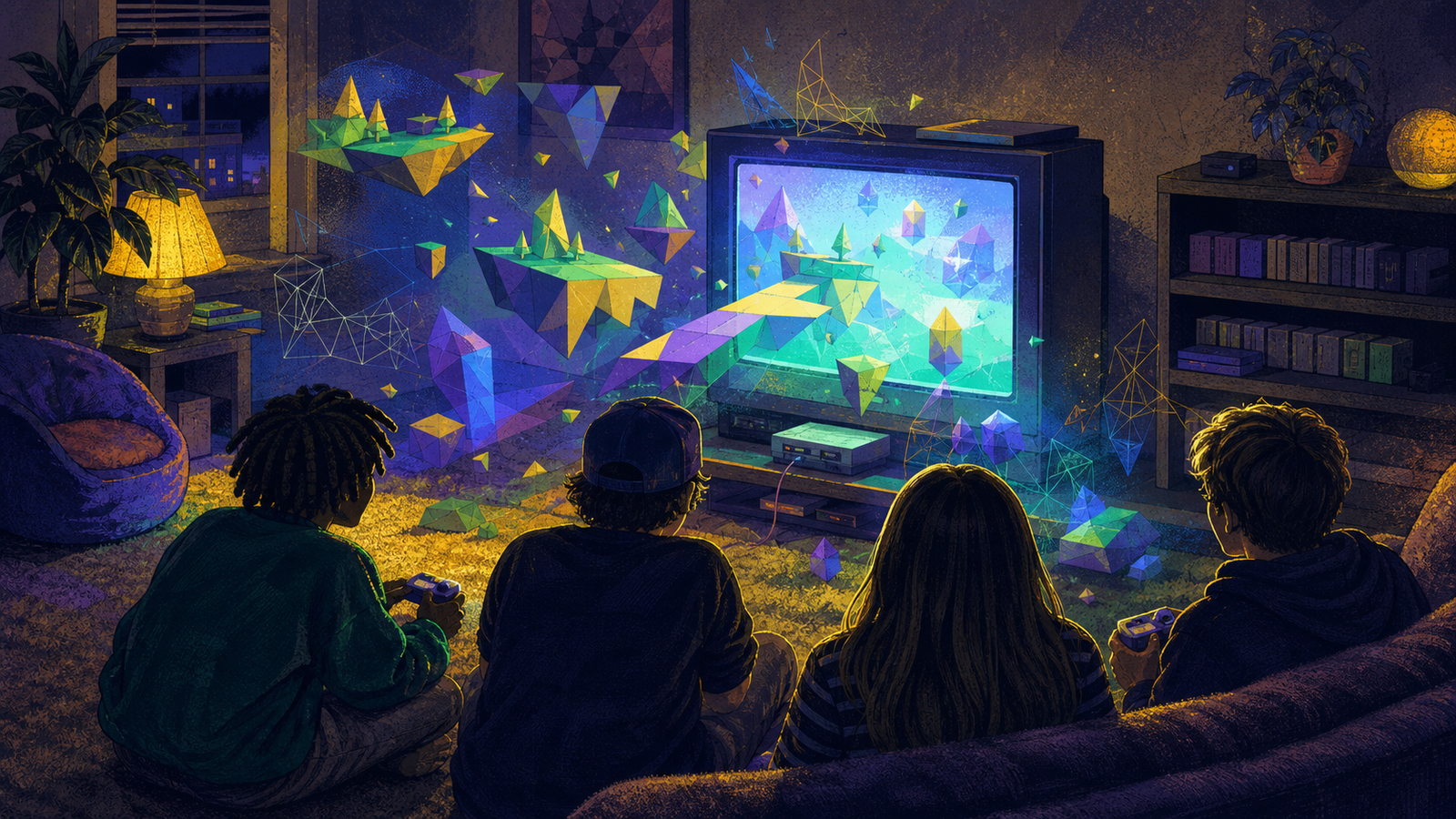
Nintendo 64 launched in Japan on June 23, 1996. Thirty years later, its memory does not fit inside a list of games. It lives in the gesture.
A generation learned to tilt an analog stick, negotiate with a three-dimensional camera, judge depth and explore spaces that seemed to continue beyond the television. 3D already existed, but the console helped turn it into a shared domestic experience.
Analog changed the body
In many 2D games, pressing a direction produced a binary response. Analog control brought intensity and angle into the conversation. Walking, running, circling and aiming began to depend on pressure and coordination.
The unusual controller embodied an industry searching for answers. Not every solution aged well, but learning a new physical language was part of the experience.
The camera became a mechanic
Moving into 3D created an invisible second character: the camera. It had to follow, reveal, hide and translate depth onto a flat screen. Players fought challenges and framing at the same time.
Four ports and one room
Four controller ports made local multiplayer central to the machine’s identity. No network, account or server needed explaining. You only needed more people and enough room on the couch.
That physical presence created memories resolution cannot reproduce: shouting, split screens, borrowed controllers, rental stores and a cartridge due back on Monday.
Ocarina and time
Ocarina of Time brought many of these discoveries together. Space, camera, combat and time became an adventure about growing up and returning. It is not merely an appendix to the anniversary; it explains why the console remains emotionally alive.
Thirty years later, the picture may look soft and the controller unusual. The gesture remains familiar: tilt the stick and believe there is an entire world beyond the screen.
Keep travelling through the history of home 3D 👇