Ocarina of Time: The Cartridge That Became a Legend
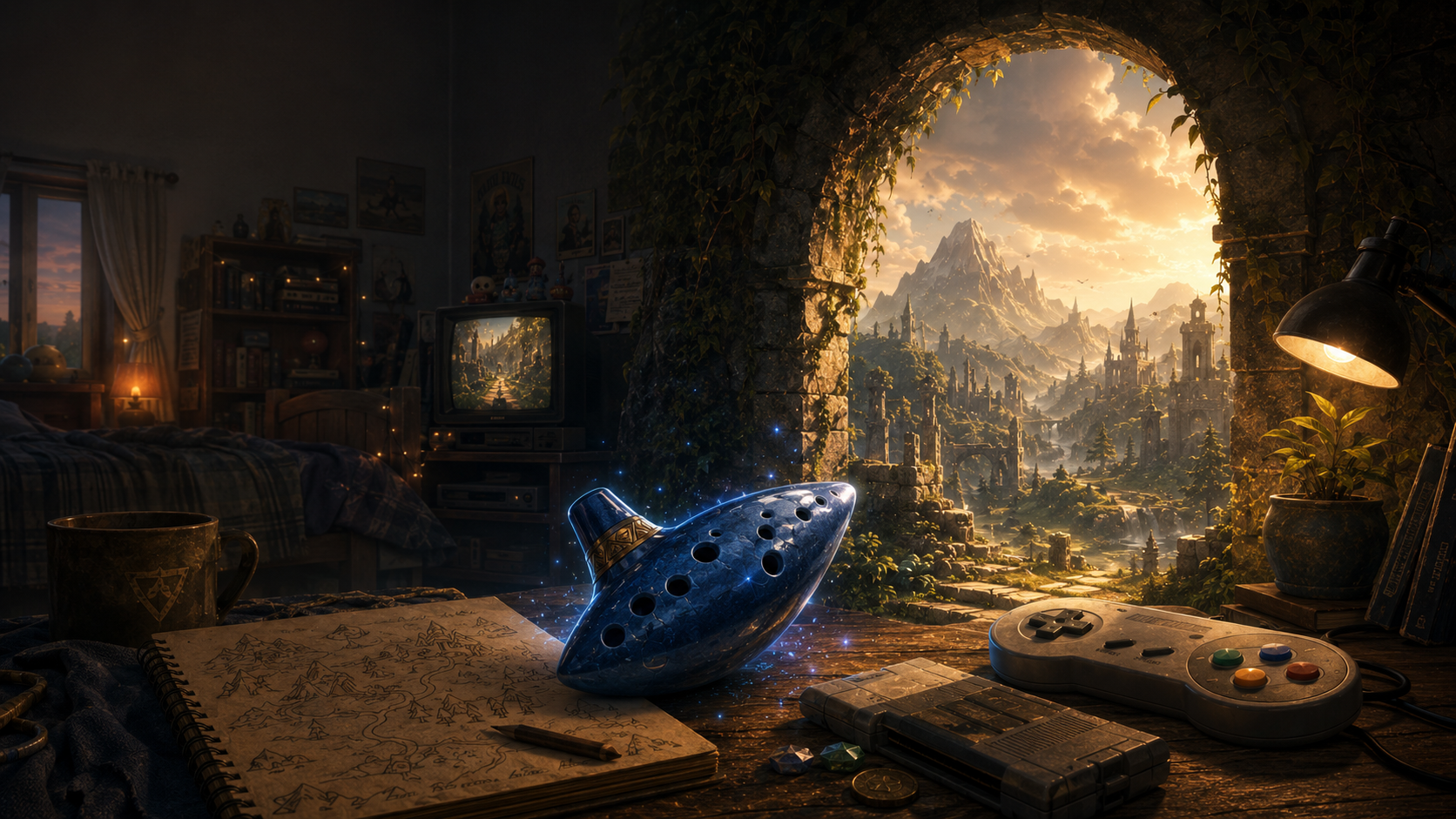
Ocarina of Time isn’t just coming back as a game. It’s coming back as a time machine.
Nintendo confirmed the Nintendo 64 classic will be “reborn” for a new generation in 2026 on Switch 2. That sentence alone is enough to wake up a very specific corner of gamer memory: the one where the room was dark, the TV was a bulky CRT, the controller felt strange in your hands, and a single cartridge could open an entire kingdom.
When Ocarina of Time arrived in 1998, it didn’t feel like just a sequel. It felt like a door. For many people, it was the first time a 3D adventure gave a real sense of scale, mystery, and freedom. There were forests, temples, villages, secrets, music, time travel, and the constant feeling that every corner hid something important.
Part of the game’s strength lives exactly there. Ocarina didn’t become a legend just for being technically impressive. It became a legend because it blended adventure, music, and discovery into a memory that’s very hard to replace.
That’s exactly why a remake is both powerful and dangerous.
Updating Ocarina means calling an entire generation back. But it also means touching an almost sacred memory. The audience doesn’t just want better graphics. It wants to feel again what it felt the first time it booted up the game. And that’s the part no remake can promise.
After all, no remake actually goes back to 1998. We do, for a few seconds, whenever an image, a song, or an old object hits the right spot in memory.
Ocarina of Time is coming back. But maybe the question isn’t whether the remake will be faithful.
Maybe the question is: does the adventure still echo inside you?
More cartridge nostalgia today. Check out our Star Fox Switch 2 review too — another N64 classic facing the same question.
Want to actually play Ocarina of Time's songs? The official 12-hole ocarina comes with a Zelda song book 👇